Climate Change

Your Next Cup of Coffee Is Growing Under More Heat

Between 2021 and 2025, all major coffee-producing countries recorded more days above 86°F, a threshold that affects yield and quality.

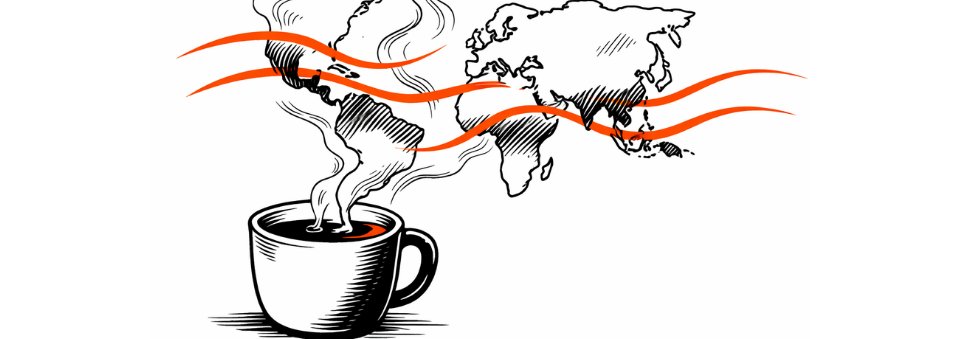
Coffee and heat banner
By: La Data Cuenta
Published February 21, 2026
Lea en Español

If you start your day with coffee, your morning routine depends on a crop facing more heat now than just a few years ago. This isn't a distant projection or hypothetical scenario. It's what already happened in the world's major coffee-growing regions between 2021 and 2025.

An analysis published by Climate Central examined daily temperatures in 25 countries that account for roughly 97 percent of global coffee production. The finding is universal: all experienced more days with temperatures above 86°F due to climate change.

That threshold isn't symbolic. Research cited in the report indicates temperatures above 86°F are extremely harmful to arabica coffee and suboptimal for robusta. These two varieties represent the vast majority of global supply. When that limit is exceeded, the plant enters heat stress, which can reduce yield, affect bean development, and alter quality.

+47
additional days per year, on average, with damaging heat across the 25 countries analyzed

Dozens of Days Added by Emissions

The study used observed temperature data and models estimating what those temperatures would have been in a world without carbon pollution. From that comparison, it calculated how many additional days exceeded 86°F due to human-induced warming.

The five largest producers—Brazil, Vietnam, Colombia, Indonesia, and Ethiopia—faced an average of 57 extra days annually under these conditions. Brazil, the world's largest producer, recorded 70 additional days per year.

The top 5 producers account for 74% of global production and faced an average of 57 additional days of damaging heat each year.
Indonesia
+73
days per year
6.1% of global production
Brazil
+70
days per year
37% of global production
Vietnam
+59
days per year
16.5% of global production
Colombia
+48
days per year
8.4% of global production
Ethiopia
+34
days per year
6.3% of global production

Do you value our work?

Support us — donate easily here

Top 25 Coffee-Producing Countries

Additional days with temperatures above 86°F, annual average 2021-2025

Explore Impact by Country and Region

Here you'll see the growing regions most affected by excess heat

A Particularly Vulnerable Crop

Arabica coffee, which accounts for 60 to 70 percent of global supply, is especially heat-sensitive. The report notes that even temperatures between 77°F and 86°F (25-30°C) can be suboptimal for this variety. This suggests the actual impact could be greater than estimated if lower temperature ranges were considered.

Beyond extreme heat, the crop depends on relatively stable rainfall patterns. Droughts, shifts in precipitation distribution, and increased presence of pests like coffee leaf rust or coffee berry borer can affect both quantity and quality. A drought in Brazil in 2023 was linked to recent increases in international prices.

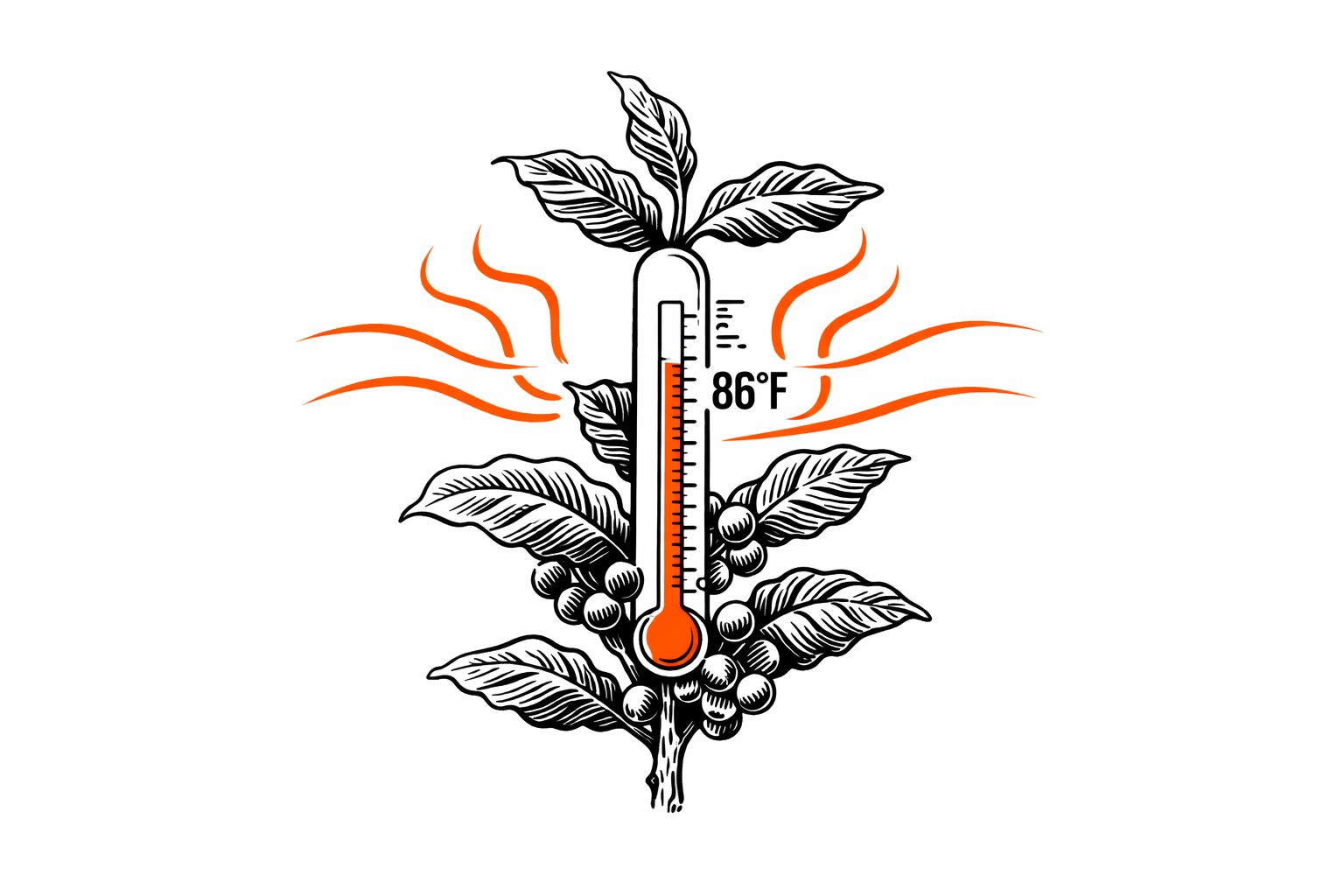
Thermometer and coffee plant

The Critical Threshold: 86°F

Above this temperature, arabica coffee enters severe heat stress

68°F
Optimal temperature
77°F
Suboptimal range
86°F
Heat stress
95°F
Severe damage
2,000
million cups of coffee consumed daily worldwide
50%
potential reduction in suitable coffee-growing area by 2050 without adaptation
<12
acres average per coffee farmer. Most are small-scale producers.

A Cup Connected to Climate

If you start your day with coffee, the temperature at the farms where that bean was grown is already part of your daily experience, even if invisible. The link between global emissions and a morning sip may seem distant, but the data indicates the coffee's climate environment is changing now.

Coffee won't disappear overnight. But its production is adapting to a warmer world. And each cup that reaches your table is the result of that ongoing transition.

Some farmers are adopting adaptation practices, such as shade-grown coffee using taller trees that protect plants from direct heat. These strategies can improve resilience, though they don't completely eliminate the risk associated with rising global temperatures.

Coffee supply chain

Methodology and Sources

This analysis is based on the study "More Coffee-Harming Heat Due to Carbon Pollution" published by Climate Central in February 2026. The study examined daily temperatures between 2021 and 2025 in 25 countries representing approximately 97% of global coffee production.

The data compares observed temperatures with models estimating what those temperatures would have been in the absence of human-caused carbon pollution. The difference allows calculation of additional days above 86°F attributable to climate change.

Note: This story incorporated generative AI tools in design, illustrations, and data visualization, with editorial oversight.